Patient Tools Directions (519) 204-7230

Vision Therapy in London, Ontario

A doctor-supervised program that trains your eyes and brain to work together — helping children read more easily, adults find relief from screen fatigue, and concussion patients recover lost visual function.

What Is Vision Therapy?

Vision therapy is sometimes described as physiotherapy for the eyes and brain. Good eyesight — seeing 20/20 on a chart — is only part of how vision works. Your eyes also need to team together, track smoothly, and focus quickly for reading, learning, sports, and everyday tasks to feel effortless. When those visual skills break down, no pair of glasses can fix it on its own. Vision therapy uses a structured, doctor-prescribed program of in-office and take-home exercises to retrain the eyes and brain to work together properly, addressing the root cause rather than just the symptoms.

Conditions Vision Therapy Can Help With

Eye Teaming & Tracking

Convergence insufficiency, lazy or crossed eyes (amblyopia and strabismus), and difficulty keeping both eyes working together as a team.

Reading & Learning

Skipping or re-reading lines, losing your place, poor reading comprehension, and visual skill gaps that get mistaken for attention or learning difficulties.

Concussion & Brain Injury

Blurred or double vision, dizziness, light sensitivity, and reading fatigue following a concussion or traumatic brain injury.

Who We Help

Children

Struggling in school, avoiding reading, or getting headaches with schoolwork can point to an underlying visual skill deficit rather than a learning or attention problem.

Adults

Screen fatigue, headaches, and difficulty focusing after long hours on a computer are often signs that your visual system needs retraining, not a stronger prescription.

Athletes & Concussion Patients

From sharpening reaction time and depth perception to recovering visual function after a concussion, we help patients get back to full performance and daily life.

Case Summaries

These de-identified examples show how vision therapy programs are tailored to each patient. Every patient's findings, treatment plan, and results are different.

Adult with visual field, balance, and light sensitivity concerns

Presenting concerns
Significantly reduced function in the right eye, with involuntary eye symptoms under strain. Dizziness and nausea when bending forward, reduced awareness of surroundings, and strong sensitivity to bright light. Peripheral visual field testing showed a small, irregular field.
Approach
A home-based program of prescribed vision therapy exercises, including coloured-filter light exercises, with peripheral visual field testing repeated weekly to track progress.
Outcomes so far
Weekly testing showed a smoother, larger peripheral field, with measurable improvement in both eyes. The glasses prescription was reduced. The patient reported that dizziness and nausea on bending had stopped apart from times of fatigue, light sensitivity had eased, eye symptoms had reduced to occasional rapid blinking under strain, and spatial awareness had improved. Therapy is ongoing.
Adult, age 60, with falls, reading difficulty, and reduced driving confidence

Presenting concerns
Years of difficulty judging stairs and doorways, with frequent falls. Reading had become increasingly difficult, and the patient had largely stopped driving for safety reasons. The patient was also interested in laser eye surgery.
Assessment and approach
Assessment found the existing glasses prescription was not correct. A new prescription was provided alongside vision therapy focused on eye muscle control, with therapy recommended before pursuing laser surgery.
Outcomes
After a few weeks of therapy with the new prescription, the patient felt confident enough to resume driving independently. After about a year of therapy, the patient was considered ready to pursue laser eye surgery.

Child with visual-motor and tracking difficulties

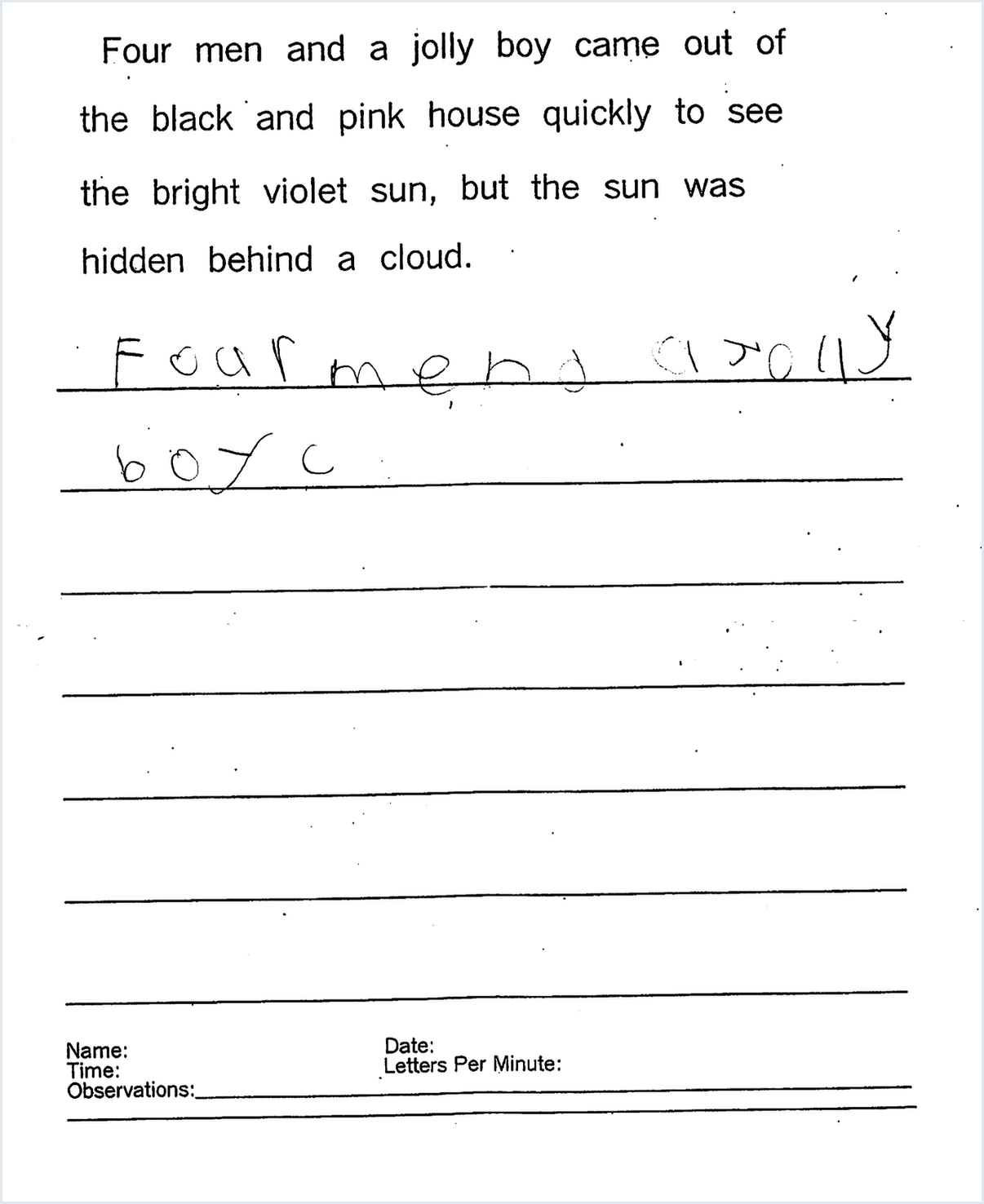
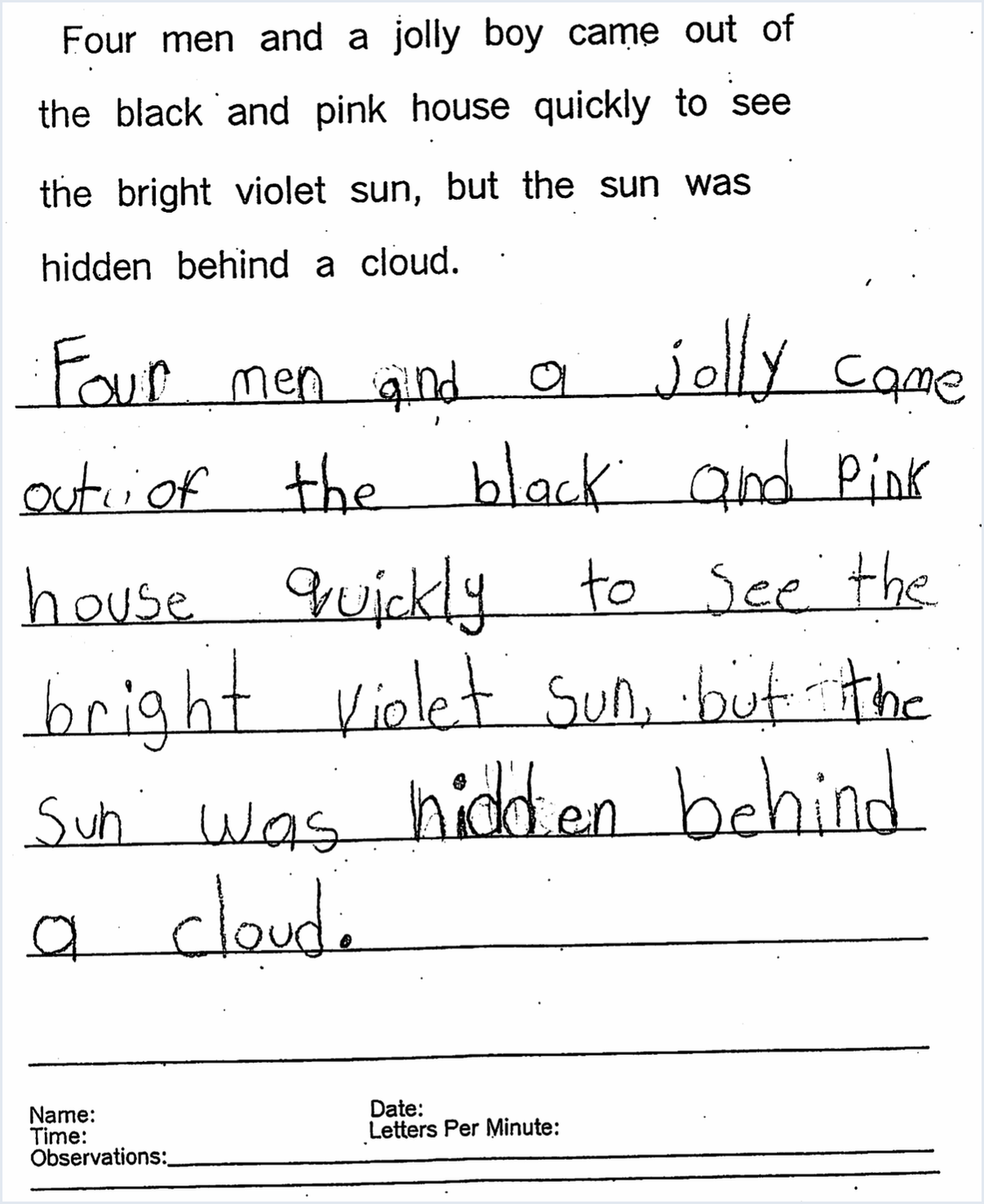
A handwriting copy exercise was used to measure visual-motor and eye tracking skills. Before therapy, the child produced a short, incomplete copy of the sentence. After the program, the full sentence was copied clearly and accurately.

Copying exercise before vision therapy, showing a short, incomplete attempt
Before therapy
Copying exercise after vision therapy, showing the full sentence copied clearly and accurately
After therapy

Read patient reviews on Google

What a Vision Therapy Program Looks Like

Every program starts with a comprehensive evaluation of your visual skills — well beyond a standard eye exam — to identify exactly where the breakdown is happening. From there, Dr. Suwala or Dr. Buxton designs a personalized plan of in-office sessions and home reinforcement exercises, often paired with neuro-functional glasses. Progress is tracked and the plan is adjusted along the way, so treatment stays matched to how you're actually responding. No referral is needed to get started — book your assessment online, or read our FAQ for answers to common questions about coverage and what to expect.